

International Fraud Awareness Week 2026: 7 Actions to Take
International Fraud Awareness Week 2026 runs from 15 to 21 November. Organised globally by the Association of Certified Fraud Examiners (ACFE), the week is a dedicated effort to reduce the impact of fraud and corruption through awareness, detection and prevention. InConsult is proud to support it.
Treating fraud and corruption control as a tick-box exercise is risky. Without dedicated leadership and practical action, your organisation faces serious financial and reputational losses.
Why is fraud awareness so important in 2026?
The threat landscape keeps evolving. Generative AI, deepfakes, sophisticated business email compromise (BEC) and complex supply chains all raise the risk for Australian organisations of every size. Three trends stand out.
External scams and cyber-enabled fraud are rising
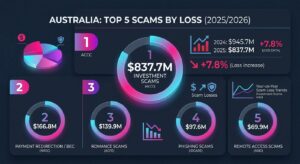
The National Anti-Scam Centre (NASC), part of the ACCC, reports in its Targeting Scams Report (March 2026) that Australians lost a combined $2.18 billion to scams in 2025, up 7.8% on 2024. Payment redirection scams, commonly known as BEC, cost $166.8 million (up 9.3%). Phishing losses rose 15.5% to $97.6 million, and phishing is often the entry point for BEC attacks.
Occupational fraud and corruption are evolving
Fraud takes many forms, including corporate fraud, procurement corruption, tax fraud and identity theft. The ACFE’s Occupational Fraud 2026: A Report to the Nations analysed 2,402 cases across 143 countries. It estimates that organisations lose about 5% of annual revenue to fraud each year. The main scheme types are:
- Asset misappropriation is the most common, appearing in 90% of cases. Theft of non-cash assets and billing schemes occur most often.
- Corruption, including bribery, undisclosed conflicts of interest and bid-rigging, appears in 45% of cases, with a median loss of US$150,000.
- Financial statement fraud is the least common (6% of cases) but the most costly, with a median loss of US$1 million.
Because many cases involve more than one scheme, these percentages add up to more than 100%.
Regulatory scrutiny is increasing
Integrity and compliance expectations continue to rise in Australia. The National Anti-Corruption Commission (NACC) is active, and the Tranche 2 Anti-Money Laundering and Counter-Terrorism Financing (AML/CTF) reforms, which commenced on 1 July 2026, now extend AUSTRAC obligations to lawyers, accountants, real estate professionals and others. Proactive governance is no longer optional.
Build a stronger anti-fraud culture
Fraud Week is the ideal time to move beyond tick-box compliance. Effective fraud and corruption control rests on three pillars:
- Prevention: proactive measures and internal controls that reduce the chance of fraud occurring.
- Detection: monitoring, whistleblowing and analytics that uncover incidents quickly.
- Response: disciplined action to investigate incidents, recover losses and fix control weaknesses.
7 actions for International Fraud Awareness Week 2026
Our seven actions cover all three pillars. Actions 1, 2 and 4 strengthen prevention, action 4 also supports detection, and action 3 tests your response. Actions 5 to 7 keep awareness high throughout the year.
1. Review your fraud and corruption control system
A strong fraud management framework rests on a Fraud and Corruption Control Policy, a Fraud and Corruption Control System (FCCS) and a concise, practical Fraud and Corruption Control Plan.
When did you last review your policy and plan? Your framework should align with AS 8001:2021 Fraud and Corruption Control. It should also address modern threats such as AI-assisted impersonation and cyber-enabled fraud, and reflect current AML/CTF and whistleblower obligations. We recommend reviewing your plan at least annually and scheduling an independent review of the framework every three years to benchmark against better practice.
2. Update your fraud risk profile
Which parts of your organisation are most exposed today? Hybrid work, AI adoption, digital payment workflows and reliance on third-party vendors have all shifted where vulnerabilities sit. Use Fraud Week to review your fraud risk register and incident logs. Then schedule targeted risk assessment workshops for high-risk areas such as procurement, finance, payroll, and grants or contract management.
3. Run a fraud crisis management exercise
If a major internal fraud, a bribery allegation or a BEC payment diversion were discovered tomorrow, your crisis management team would be activated immediately. How prepared are they? Could you preserve digital evidence, notify regulators and manage stakeholder and media scrutiny? Run an unannounced desktop exercise, with executive sponsorship, to test your response playbook under pressure.
4. Schedule fraud and corruption awareness training
According to the ACFE, 43% of frauds are detected by a tip. Staff who can spot red flags and know how to report them safely are therefore one of your most effective detection controls. InConsult offers tailored, in-house Fraud and Corruption Awareness Training for boards, managers and frontline staff. It covers emerging risks, behavioural and financial red flags, safe use of reporting channels and day-to-day internal controls. Contact us to discuss your needs.
5. Read and circulate relevant publications
Awareness works best when the material is practical and easy to read. Share these resources with your teams:
- Looking Out for the Fraud Red Flags – InConsult
- Occupational Fraud 2026: A Report to the Nations – Association of Certified Fraud Examiners (ACFE)
- Targeting Scams Report – National Anti-Scam Centre (ACCC)
Real-world cases are one of the best ways to strengthen controls. Follow InConsult on LinkedIn for the latest on fraud prevention, risk management, governance and internal audit.
6. Watch One Minute Risk Manager
Short on time? Tune in to our One Minute Risk Manager YouTube channel for bite-sized episodes on fraud prevention, including “5 Tips to Protect Your Organisation from Internal Fraud” and “Understanding Fraud Red Flags”.
7. Visit fraudweek.com
FraudWeek.com offers free ACFE resources, including videos and toolkits, to promote anti-fraud awareness across your workplace.
Get in touch
To strengthen fraud and corruption control in your organisation, visit our Fraud and Corruption Prevention services page. If you would like to discuss our fraud and corruption prevention services, please contact us.